โครงการฝึกอบรมนานาชาติประจำปี(Annual International Training Course: AITC) ณ บ้านดอนกอย จังหวัดสกลนคร เมื่อวันที่ 8 พฤษภาคม 2569
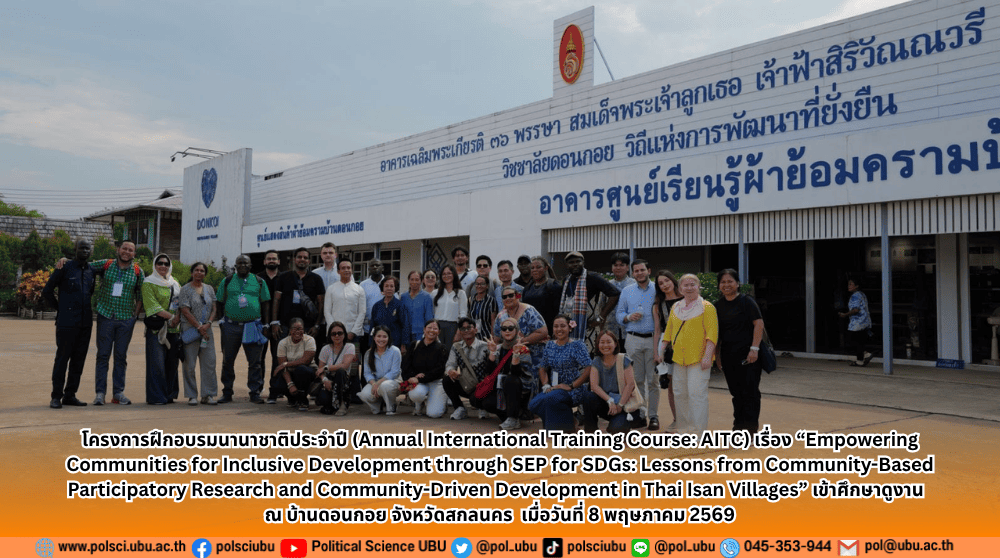
[English below] ในช่วงบ่ายของวันที่ 7 พฤษภาคม 2569 ผู้เข้าร่วมจำนวน 28 คน จาก 17 ประเทศ ได้แก่ อาร์เมเนีย อาเซอร์ไบจาน อินโดนีเซีย สปป.ลาว มาเลเซีย เมียนมา ปากีสถาน ศรีลังกา อุซเบกิสถาน ซามัว มาดากัสการ์ โมซัมบิก ไนจีเรีย ยูกันดา เอลซัลวาดอร์ และสาธารณรัฐโดมินิกัน ได้ร่วมศึกษากระบวนการผลิตผ้าฝ้ายย้อมครามและการย้อมสีธรรมชาติแบบดั้งเดิม ณ บ้านดอนกอย จังหวัดสกลนคร ซึ่งเป็นพื้นที่ที่ภูมิปัญญาท้องถิ่น งานหัตถกรรมดั้งเดิม และการผลิตสิ่งทอโดยชุมชน ยังคงมีบทบาทสำคัญในการอนุรักษ์มรดกทางวัฒนธรรมและวิถีชีวิตของหมู่บ้านอีสานไทย ควบคู่ไปกับการสร้างรายได้เสริมให้แก่ครอบครัวในชุมชน
“ดอนกอยโมเดล” ถือเป็นหนึ่งในโครงการตามแนวพระดำริของสมเด็จพระเจ้าลูกเธอ เจ้าฟ้าสิริวัณณวรี นารีรัตนราชกัญญา ซึ่งได้รับการสนับสนุนจากกรมการพัฒนาชุมชน กระทรวงมหาดไทย ทั้งนี้ จังหวัดสกลนครได้รับการยอมรับมาอย่างยาวนานว่าเป็นหนึ่งในศูนย์กลางสำคัญและเก่าแก่ที่สุดของการผลิตผ้าย้อมครามแบบดั้งเดิมในประเทศไทย โดยชุมชนท้องถิ่นยังคงสืบทอดองค์ความรู้และเทคนิคเหล่านี้จากรุ่นสู่รุ่น
นอกจากนี้ คณะผู้เข้าร่วมยังได้เดินเที่ยวในหมู่บ้านบ้านดอนกอย เพื่อให้ได้สัมผัสและเรียนรู้วิถีชีวิตและวัฒนธรรมท้องถิ่นของชุมชนอีสานไทยโดยตรง กิจกรรมดังกล่าวเป็นส่วนหนึ่งของโครงการฝึกอบรมนานาชาติประจำปี (Annual International Training Course: AITC) เรื่อง “Empowering Communities for Inclusive Development through SEP for SDGs: Lessons from Community-Based Participatory Research and Community-Driven Development in Thai Isan Villages” ซึ่งดำเนินการโดย ดร.ฐิติพล ภักดีวานิช หัวหน้าโครงการ พร้อมคณะจากคณะรัฐศาสตร์ มหาวิทยาลัยอุบลราชธานี ภายใต้การสนับสนุนจากกรมความร่วมมือระหว่างประเทศ กระทรวงการต่างประเทศ และจัดขึ้นระหว่างวันที่ 1–15 พฤษภาคม 2569
In the afternoon of 7 May 2026, a group of 28 participants from 17 countries, including Armenia, Azerbaijan, Indonesia, Lao PDR, Malaysia, Myanmar, Pakistan, Sri Lanka, Uzbekistan, Samoa, Madagascar, Mozambique, Nigeria, Uganda, El Salvador, and the Dominican Republic, explored traditional indigo-dyed cotton and other natural dyeing techniques at Ban Don Koi, Sakon Nakhon Province, where local wisdom, traditional craftsmanship, and community-based textile production continue to preserve the cultural heritage and way of life of Thai Isan villages, while also providing additional income for local families.
The Donkoi Model is one of the royal initiative projects under Her Royal Highness Princess Sirivannavari Nariratana Rajakanya, supported by the Community Development Department, Ministry of Interior. Sakon Nakhon Province has long been recognised as one of the earliest and most important centres of traditional indigo-dyed textile production in Thailand, with local communities preserving these techniques across generations.
The visit also included a village walk exploring Ban Don Koi Village, which provided participants with an opportunity to witness and experience directly the way of life and local culture of Thai Isan communities.
The activity formed part of the Annual International Training Course (AITC) entitled “Empowering Communities for Inclusive Development through SEP for SDGs: Lessons from Community-Based Participatory Research and Community-Driven Development in Thai Isan Villages”. The programme, led by Dr Titipol Phakdeewanich, Project Director, and his team from the Faculty of Political Science, Ubon Ratchathani University, is being implemented with the generous support of the Thailand International Cooperation Agency (TICA), Ministry of Foreign Affairs, and is being held from 1–15 May 2026.
#ดอนกอยโมเดล #ผ้าย้อมครามสกลนคร #ภูมิปัญญาไทยสู่สากล #สืบสานงานศิลป์ถิ่นอีสาน #การพัฒนาชุมชนอย่างยั่งยืน #รัฐศาสตร์มออุบล #รัฐประศาสนศาสตร์ #การเมืองและความสัมพันธ์ระหว่างประเทศ #TICA #SEPforSDGs