ส่งเสริมความร่วมมือทางวิชาการและงานวิจัยผ่านการอภิปราย เรื่องผลกระทบของการวางผังเมืองต่อชีวิตและวัฒนธรรมท้องถิ่นในเขต Xindian นคร New Taipei
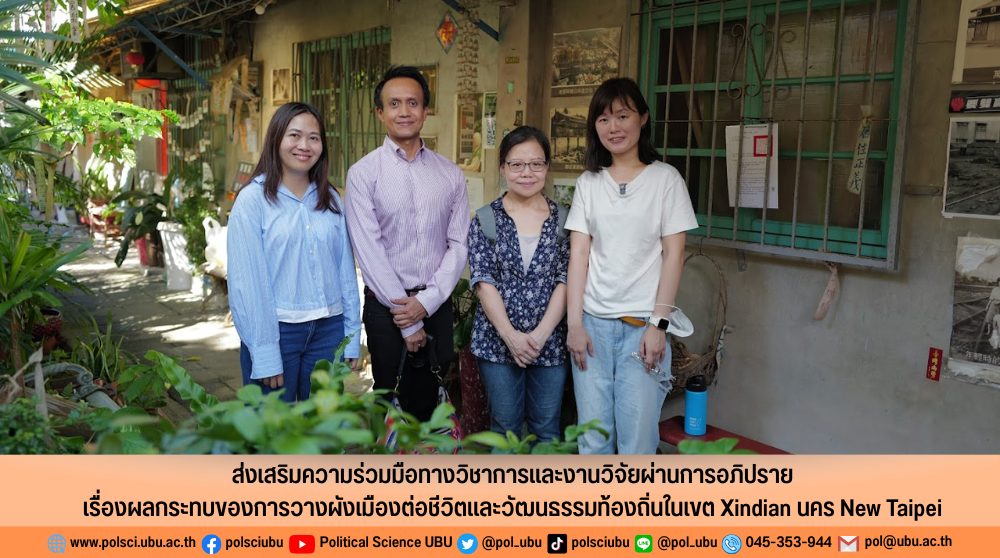
ส่งเสริมความร่วมมือทางวิชาการและงานวิจัยผ่านการอภิปรายเรื่องผลกระทบของการวางผังเมืองต่อชีวิตและวัฒนธรรมท้องถิ่นในเขต Xindian นคร New Taipei
Ms Lai Bi-chen เจ้าของบ้านซึ่งเป็นกรณีศึกษาการย้ายบ้านริมคลอง Lugong ใน Xindian — ผู้ต่อสู้คดีทางกฎหมายมากว่า 13 ปีเพื่อรักษาบ้านสมัยอาณานิคมญี่ปุ่นของครอบครัวจากการรื้อถอนโดยบังคับ — และ Assistant Professor Hung-Ying Chen นักวิชาการด้านภูมิศาสตร์เมืองและการวางผังเมือง จาก International College of Innovation, National Chengchi University, ไต้หวัน ได้เชิญทีมจากคณะรัฐศาสตร์ มหาวิทยาลัยอุบลราชธานี มาสำรวจผลกระทบของการวางผังเมืองต่อชีวิตและวัฒนธรรมท้องถิ่นในเขต Xindian ริมคลอง Lugong ซึ่งการศึกษาภาคสนามสิ้นสุดที่บ้านหลังสุดท้ายของส่วนหัวคลอง — บ้านสไตล์ longhouse หลังเดียวที่หันหน้าเข้าคลอง สร้างก่อนปี 1945 โดยปู่ของ Ms Lai Bi-chen ชื่อ Cai Jinmu และเป็นพยานทางประวัติศาสตร์ของพื้นที่
ระหว่างการลงพื้นที่ศึกษาข้อมูล ผู้เข้าร่วมได้ร่วมถกประเด็นเรื่องสิทธิในที่ดินของประชาชนทั่วไปภายใต้กรอบสิทธิมนุษยชนทั้งระดับชาติและนานาชาติ รวมถึง Article 25(1) ของ Universal Declaration of Human Rights และ Article 11(1) ของ International Covenant on Economic, Social and Cultural Rights การอภิปรายเน้นถึงผลกระทบจากการใช้อำนาจรัฐอย่างไม่เหมาะสมต่อความเป็นอยู่ การละเมิดสิทธิในที่อยู่อาศัย และการสูญเสียมรดกทางวัฒนธรรม กรณีของ Ms Lai Bi-chen มีความท้าทายร่วมกับปัญหาสิทธิในที่ดินของชุมชนผู้ด้อยโอกาสในอุบลราชธานีและพื้นที่ชนบทของไทย การเยี่ยมชมครั้งนี้เสริมาร้างความร่วมมือทางวิชาการและงานวิจัยด้านงานสังคมสงเคราะห์ระหว่าง International College of Innovation, National Chengchi University และคณะรัฐศาสตร์ มหาวิทยาลัยอุบลราชธานี โดยทั้งสองสถาบันมุ่งเน้นการเสริมพลังชุมชนท้องถิ่นเพื่อปกป้องวัฒนธรรมของตนเอง
Promoting Academic and Research Collaboration through Discussing the Implications of Urban Planning on Local Life and Culture in Xindian District, New Taipei City
Ms Lai Bi-chen, the homeowner at the centre of the Taiwan Lugong Canal relocation case — who has fought an 13-year legal battle to save her Japanese colonial-era family home from forced eviction — and Assistant Professor Hung-Ying Chen, an urban geography and planning scholar from the International College of Innovation, National Chengchi University in Taiwan, invited a team from the Faculty of Political Science, Ubon Ratchathani University, to explore the implications of urban planning on local life and culture in Xindian District, New Taipei City, along the historic Lugong Canal. The field study concluded at the last remaining house in the canal’s head section — the only longhouse-style bungalow facing the canal, built before 1945 by Ms Lai Bi-chen’s grandfather, Cai Jinmu, and bearing witness to the history of the area.
During the visit, participants discussed the land rights of ordinary residents through the lens of national and international human rights frameworks, including Article 25(1) of the Universal Declaration of Human Rights and Article 11(1) of the International Covenant on Economic, Social and Cultural Rights. Discussions highlighted how the abuse of state power can undermine livelihoods, violate the right to housing, and contribute to the loss of cultural heritage. The case of Ms Lai Bi-chen shares many challenges with land rights issues faced by underprivileged communities in Ubon Ratchathani and rural areas of Thailand. The visit also served as a platform to strengthen academic and research collaboration in social work between the International College of Innovation, National Chengchi University, and the Faculty of Political Science, Ubon Ratchathani University, as both institutions are committed to empowering local communities to protect their cultural heritage.
#มหาวิทยาลัยอุบลราชธานี #POL_UBU #คณะรัฐศาสตร์มหาวิทยาลัยอุบลราชธานี #กลุ่มศึกษาวิจัยนโยบายและนวัตกรรม #PISG