โครงการศึกษาภาคสนามที่มุ่งส่งเสริมให้นักศึกษาได้พัฒนาทักษะการคิดเชิงวิพากษ์และการแก้ปัญหา รวมทั้งการนำความรู้ทางทฤษฎีไปประยุกต์ใช้กับสถานการณ์จริง
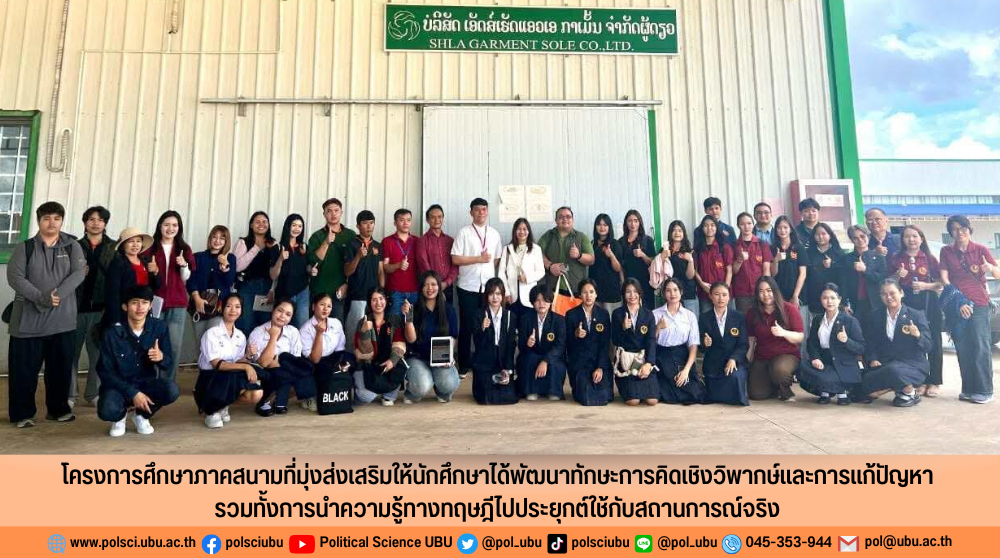
ภายใต้โครงการศึกษาภาคสนามที่มุ่งส่งเสริมให้นักศึกษาได้พัฒนาทักษะการคิดเชิงวิพากษ์และการแก้ปัญหา รวมทั้งการนำความรู้ทางทฤษฎีไปประยุกต์ใช้กับสถานการณ์จริง หลักสูตรรัฐประศาสนศาสตรบัณฑิต (รป.บ.) คณะรัฐศาสตร์ มหาวิทยาลัยอุบลราชธานี ได้จัดโครงการศึกษาดูงานนักศึกษา เมื่อวันที่ 1 กันยายน 2568 ภาคเช้า ณ บริษัท SHLA Garment Co., Ltd. ในเขตเศรษฐกิจพิเศษสะหวัน–เซโน แขวงสะหวันนะเขต สปป.ลาว เพื่อเรียนรู้กระบวนการผลิตสินค้าในสายการผลิตให้ได้ตามมาตรฐาน และแลกเปลี่ยนถึงความท้าทายที่บริษัทเผชิญ หลังจากสหรัฐอเมริกาประกาศใช้มาตรการเก็บภาษีตอบโต้ในอัตรา 40% ต่อสินค้าจากลาว มีผลบังคับใช้ตั้งแต่วันที่ 1 สิงหาคม 2568 ตามแผนภาษีการค้าระดับโลกของประธานาธิบดีโดนัลด์ ทรัมป์ บริษัทแห่งนี้ได้ย้ายฐานการผลิตมาจากเมียนมาเนื่องจากความไม่แน่นอนทางการเมืองหลังรัฐประหารปี 2564 โดยปัจจุบันมีพนักงานชาวลาวประมาณ 80% และแรงงานข้ามชาติชาวเมียนมา 20% ในสายการผลิต การพูดคุยระหว่างการศึกษาดูงานเน้นถึงความสำคัญของการสนับสนุนการจ้างแรงงานภายในท้องถิ่น การแสวงหาตลาดทางเลือกเพื่อบรรเทาผลกระทบจากมาตรการภาษีดังกล่าว ซึ่งส่งผลโดยตรงต่ออุตสาหกรรมเสื้อผ้าของลาว การคงการผลิตจึงเป็นสิ่งสำคัญ ไม่เพียงเพื่อรักษาอุตสาหกรรม แต่ยังเป็นแหล่งรายได้และการยังชีพที่สำคัญสำหรับชุมชนท้องถิ่น
As part of the field study programme designed to provide students with opportunities to enhance their critical thinking and problem-solving skills, and to apply theoretical knowledge to real-world challenges, the Faculty of Political Science, Ubon Ratchathani University, organised a student study visit on 1 September 2025 to SHLA Garment Co., Ltd. in the Savan-Seno Special Economic Zone, Savannakhet, Lao PDR. The purpose was to explore the standardized production process in the production line and discuss the challenges faced by the company following the United States’ imposition of a 40% reciprocal tariff on goods from Laos, effective 1 August 2025, as part of President Donald Trump’s broader global tariff plan. The company, which relocated from Myanmar due to political uncertainty after the 2021 coup d’état, currently employs approximately 80% local Lao workers and 20% Burmese migrant workers on its production line. Discussions during the visit emphasised that exploring the employment supporting of local labor, alternative markets is a crucial strategy to mitigate the impact of the tariff, which has directly affected Laos’s garment sector. Maintaining production is vital, not only to sustain the industry but also to provide an essential source of income and livelihood for local communities.
#PAUBA #รปศมออุบล #รัฐประศาสนศาสตร์ #คณะรัฐศาสตร์ #มออู้บู้